Fixing Slow Boot Times
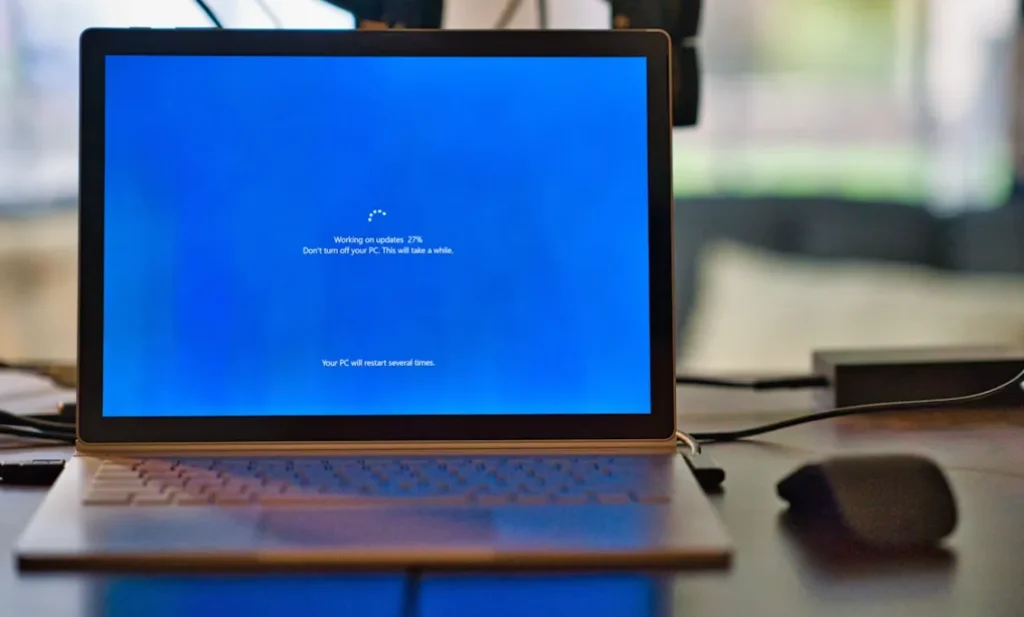
Few things are more frustrating than pressing your PC’s power button and then waiting far longer than you should for the desktop to appear. A slow boot time — the total time from powering on to being ready to use — can make even a high-performance system feel sluggish.
Common culprits include too many startup applications, outdated or incompatible drivers, hardware limitations, and misconfigured BIOS/UEFI settings. Malware, corrupted system files, and failing drives can also add significant lag. On older machines with mechanical hard drives, the problem is often compounded by slow read/write speeds, whereas modern systems with solid-state drives (SSDs) can still experience slow boots due to software or configuration issues.
What is my stupid computer even doing?
When you press the power button, your PC follows a set sequence before you see the Windows desktop. The process begins with the Power-On Self-Test (POST), a hardware check run by the system’s firmware (BIOS or UEFI). During POST, your computer verifies that critical components — like the CPU, RAM, and storage devices — are present and functioning. If any errors occur at this stage, the system may beep in a specific pattern or display an error message before halting.
After POST, the firmware locates and loads the bootloader, a small program stored on your system drive. On Windows systems, this is typically the Windows Boot Manager, which loads the operating system kernel into memory. The kernel then initializes system drivers and core services needed to run Windows.
Once the OS is loaded, logon processes begin. This includes initializing user profiles, applying group policies (on domain-joined systems), loading background services, and starting up any programs set to run at boot. Only after these steps finish is your PC fully ready for use.
Is it SLOW slow or are you just trying to get your time down to the nanoseconds?
We are mainly going to talk about fixing up your system when it is booting ungodly slow. But if it is already decently fast and you just want to make it better, this stuff will help too. Make sure you are keeping score, though.
While you can roughly measure boot time with a stopwatch, Windows offers built-in tools for more precise data:
- Task Manager Startup Tab – Press
Ctrl + Shift + Esc, go to the Startup tab, and check the “Startup impact” ratings for each program. While this won’t give you the total boot duration, it shows which apps are slowing down startup. - Windows Event Viewer – Navigate to Applications and Services Logs → Microsoft → Windows → Diagnostics-Performance → Operational. Event ID 100 logs the total boot duration in milliseconds, along with details about which processes took the longest.
- Third-party utilities – Tools like BootRacer can measure and log boot times over multiple restarts, giving you average performance data and helping track improvements after making changes.
Common causes of slow boot times
Software-related causes
One of the most frequent reasons for slow startup is too many programs loading at boot. Every app you install that adds itself to the startup list increases the time it takes for Windows to become usable. Antivirus software, messaging apps, game launchers, and cloud sync tools are common offenders. Even if each app adds only a few seconds, the cumulative effect can be substantial.
Background services can also drag out boot time. These are processes that don’t appear on the desktop but run in the background, such as printer monitors, update managers, or telemetry services. Some are essential, but many can be safely disabled from starting automatically.
Outdated or incompatible drivers are another factor. If Windows is forced to wait for hardware initialization due to driver issues, it can cause delays during the boot sequence. This is especially common with GPU, network, or storage drivers.
Lastly, corrupted system files can force Windows to retry loading certain components, slowing everything down. This often occurs after a failed update or improper shutdown. On mechanical hard drives, fragmentation and general disk bloat can worsen the problem by increasing the time it takes to read OS files during startup.
Hardware-related causes
Hardware bottlenecks are a significant contributor to slow boots, especially on older systems. The biggest difference-maker is your system drive type:
If you have a classic style mechanical disk drive (which you definitely do if your computer is older than 2015 and has never been upgraded), then stop reading and just upgrade that to SSD. You will not believe how much faster putting in a solid state drive makes it.
- HDD (Hard Disk Drive) – Mechanical drives have much slower read/write speeds, so loading the OS and startup programs takes longer.
- SSD (Solid State Drive) – SSDs significantly reduce boot times by offering much faster access speeds.
Insufficient RAM can also delay startup, particularly if the system is forced to use the page file heavily before the desktop is ready.
Another culprit is aging or failing hardware. A failing drive might have bad sectors, causing long pauses as Windows retries reads. Similarly, overheating components may throttle performance right from startup.
Configuration-related causes
Sometimes the issue lies not in the hardware or software, but in system settings. If fast startup is disabled in Windows, boot time can increase because the system performs a full initialization instead of using a partially hibernated state.
In the BIOS/UEFI, boot order misconfigurations can cause delays if the system attempts to check multiple devices — such as USB drives or network boot — before loading the OS. Disabling unused boot options can shave seconds off startup.
Finally, certain BIOS/UEFI features, like long POST times or legacy compatibility settings, can add unnecessary delays if not optimized for your current hardware setup.
Anyway, lets get into making your hunk of crap stink a little less.
1. Check and disable unnecessary startup programs
One of the fastest and easiest ways to improve boot time is to limit the number of programs that load when Windows starts. Each additional startup program competes for CPU, memory, and storage bandwidth during boot, slowing down the time it takes to reach a usable desktop.
Using Task Manager to manage startup apps
- Press
Ctrl + Shift + Escto open Task Manager. - Click the Startup tab.
- Review the list of applications, noting the Startup impact rating (Low, Medium, or High).
- Right-click and select Disable for programs you don’t need to launch automatically.
High-impact apps are often the best candidates to disable first. Examples might include game launchers, messaging apps, or cloud storage sync tools — these can be launched manually after the system has booted.
Using Autoruns for deeper cleanup
For more advanced control, Microsoft’s Autoruns utility offers a detailed view of everything that loads at startup, including scheduled tasks, services, and browser helper objects. This tool is more comprehensive than Task Manager but should be used with caution — disabling essential system processes can cause problems.
- Download Autoruns from Microsoft’s Sysinternals site.
- Run the program as an administrator.
- Navigate through the tabs to review and disable unnecessary entries.
Best practices when disabling startup items
- Only disable software you recognize and are sure you don’t need running automatically.
- Avoid turning off antivirus or essential hardware utilities.
- If unsure about a program, search its name online before disabling it.
Disabling non-essential startup programs can significantly reduce boot times, especially on systems with many background applications. This change is also reversible, making it a safe first step in troubleshooting.
2. Update Windows and drivers
Outdated system files and drivers can add unnecessary delays during the boot process. Windows relies on efficient communication between hardware and software at startup, and old or incompatible drivers can stall initialization, forcing the system to retry loading them or run in fallback modes.
Updating Windows
Keeping Windows up to date ensures you have the latest performance optimizations, bug fixes, and security patches.
- Press
Windows + Ito open Settings. - Navigate to Windows Update.
- Click Check for updates and install any available updates.
- Restart your PC when prompted.
For slow boot troubleshooting, it’s important to install not just cumulative updates but also optional driver updates, which can include fixes for startup-related issues.
Updating device drivers
Drivers tell Windows how to communicate with hardware like your GPU, network adapter, and storage controller. Updating them can resolve boot-time delays caused by poor hardware initialization.
- Press
Windows + Xand select Device Manager. - Right-click the device you want to update (e.g., display adapter, disk drive, network adapter) and choose Update driver.
- Select Search automatically for drivers, or download the latest drivers from the manufacturer’s website.
For best results, download directly from the hardware vendor:
- GPU drivers: NVIDIA, AMD, Intel
- Motherboard/Chipset drivers: Intel, AMD, or your motherboard manufacturer
- Storage controller drivers: Intel RST, AMD SATA/NVMe drivers
Updating BIOS/UEFI firmware
Sometimes slow boots are caused by outdated firmware, which controls the POST process and initial hardware checks. Updating the BIOS/UEFI can improve startup times and resolve hardware compatibility problems.
- Visit your motherboard manufacturer’s support page to find the latest firmware.
- Follow the manufacturer’s instructions carefully — a failed update can render the system unbootable.
Best practices for updates
- Create a restore point before major driver or firmware changes.
- Only update firmware if the release notes specifically mention startup improvements or hardware fixes relevant to your system.
- Restart and re-test boot time after each major update to track improvement.
3. Scan for malware or PUPs
Malware and potentially unwanted programs (PUPs) can significantly slow down boot times by injecting themselves into startup processes, running hidden background tasks, or interfering with normal system operations. Even legitimate software that engages in aggressive background activity — such as adware or poorly coded utilities — can have the same effect.
Why malware affects boot time
At startup, malware may attempt to load before or alongside legitimate system services. This can delay the OS from initializing fully, and in some cases, malicious code modifies boot records or system files, adding further delays. Some forms of malware even disable optimization features like Fast Startup to ensure persistence.
Using Windows Security for a quick check
Windows has a built-in antivirus tool, Windows Security (Microsoft Defender), which can detect and remove many common threats:
- Press
Windows + Ito open Settings. - Navigate to Privacy & security → Windows Security and open the app.
- Click Virus & threat protection.
- Select Quick scan for a fast check, or Full scan for a deeper system sweep.
If malware is found, follow the prompts to quarantine or remove the infection, then restart and re-check boot performance.
Using reputable third-party scanners
Sometimes it’s best to supplement Windows Security with another trusted scanner for a second opinion:
- Malwarebytes – Good at catching PUPs, adware, and other non-traditional threats.
- ESET Online Scanner – A lightweight, cloud-based scan without full installation.
- Kaspersky Virus Removal Tool – Portable utility for deep system checks.
These tools can identify stubborn threats that Windows Security might miss, especially when run in Safe Mode, which loads only minimal system drivers and services.
Best practices for keeping malware away
- Keep your antivirus software up to date.
- Avoid downloading software from unverified sources.
- Periodically review installed programs in Settings → Apps and uninstall anything suspicious or unused.
Even if malware isn’t the primary cause of your slow boot, eliminating unwanted background processes can help improve startup speed and overall system responsiveness.
4. Repair corrupted system files
Corrupted or missing system files can cause Windows to load slowly, hang during boot, or fail to initialize certain services until repeated attempts are made. Corruption can occur from sudden power loss, failed updates, malware, or failing storage devices.
Why system file integrity matters for boot speed
During startup, Windows loads a large number of critical files from the system directory (C:\Windows\System32 and related locations). If any of these files are damaged or altered, Windows may attempt to repair or reload them during boot, adding seconds — or even minutes — to the process. In severe cases, the system might enter an automatic repair loop.
Running the System File Checker (SFC)
SFC scans for and replaces corrupted system files with clean copies stored in the Windows component store.
- Press
Windows + S, type cmd, right-click Command Prompt, and choose Run as administrator. - Type:
sfc /scannow - Press Enter and wait for the scan to complete. This may take 10–20 minutes.
- If SFC finds and repairs files, restart your PC and test boot time.
Running the Deployment Imaging Service and Management Tool (DISM)
If SFC can’t fix everything, DISM can repair the Windows component store itself.
- Open Command Prompt as administrator.
- Run:
DISM /Online /Cleanup-Image /RestoreHealth - Allow the process to finish — it can take 10–30 minutes depending on system performance.
- Run
sfc /scannowagain afterward to confirm repairs.
When to consider an in-place repair install
If both SFC and DISM fail to resolve the issue, performing an in-place repair install (also called a Windows repair upgrade) can restore all core system files while keeping your apps and files intact. This is done by downloading the latest Windows ISO from Microsoft and running the setup from within Windows.
Best practices for preventing file corruption
- Shut down your PC properly rather than forcing power-off.
- Use a reliable power supply or UPS to avoid outages during updates.
- Regularly scan your storage drive for errors with
chkdsk.
By restoring damaged files to their original state, you remove a major potential bottleneck in the boot process.
5. Reset Windows completely
If you’ve tried every other fix and your PC still takes an unreasonably long time to boot, a Windows reset can restore performance by returning the operating system to a clean state. This process removes corrupted configurations, leftover registry entries, and unnecessary software bloat — all common contributors to slow startup.
Why a reset can help
Over time, installing and uninstalling programs, tweaking settings, and applying updates can leave behind fragmented system files and conflicting configurations. A reset reinstalls Windows system files fresh, without the accumulated clutter.
Resetting Windows while keeping files
Windows offers a reset option that preserves your personal files but removes apps and restores default settings:
- Press
Windows + Ito open Settings. - Go to System → Recovery.
- Under Reset this PC, click Get started.
- Choose Keep my files.
- Follow the prompts to complete the reset.
Afterward, you’ll need to reinstall programs and drivers, but documents, photos, and other personal files will remain untouched.
Performing a clean install
If you want the best possible chance at restoring peak performance, a clean install goes further by wiping the system drive completely. This is more time-consuming but guarantees a truly fresh environment.
- Download the Windows Media Creation Tool from Microsoft.
- Create a bootable USB installer.
- Boot from the USB drive, delete partitions on the system drive, and install Windows from scratch.
Preparing before a reset
- Back up important files to an external drive or cloud storage.
- Note down software licenses and activation keys.
- Make sure you have installation media or download links for essential programs.
When to avoid a reset
If slow boot is caused by failing hardware (especially the drive), a reset won’t fix the problem and may lead to data loss. Always rule out hardware failure before wiping the system.
6. Optimize storage
Your system drive’s performance has a direct impact on how quickly Windows loads. If your primary drive is slow, cluttered, or fragmented, boot times will suffer — especially if you’re still running on a mechanical hard disk drive (HDD).
SSD vs. HDD boot performance
The single biggest upgrade for faster startups is moving Windows from an HDD to a solid-state drive (SSD).
- HDDs use spinning platters and a moving read/write head, which slows access to scattered system files.
- SSDs store data on flash memory, providing near-instant access to files and significantly reducing boot times.
If your system still runs Windows on an HDD, migrating to an SSD can cut boot times from over a minute to under 20 seconds in many cases.
Defragmenting HDDs and enabling TRIM for SSDs
- For HDDs: Fragmentation spreads parts of files across the disk, forcing the drive head to move more during reads. Running Windows’ built-in “Defragment and Optimize Drives” tool can consolidate files and improve load speed.
- For SSDs: Defragmentation isn’t necessary. Instead, ensure TRIM is enabled, which helps the drive manage deleted data efficiently. You can check by opening Command Prompt and running:
fsutil behavior query DisableDeleteNotifyA result of0means TRIM is active.
Cleaning up temporary files and caches
Over time, Windows accumulates temporary files, browser caches, and leftover installation data that can take up space and slow down disk access.
- Press
Windows + S, type Disk Cleanup, and run it. - Select your system drive (usually C:).
- Check boxes for temporary files, recycle bin, and system cache items.
- Click OK and confirm deletion.
For more thorough cleaning, tools like BleachBit or CCleaner (free version) can remove additional leftover data — but be cautious to avoid deleting necessary files.
Checking drive health
A slow boot can sometimes signal an aging or failing drive. Free tools like CrystalDiskInfo can report drive health based on S.M.A.R.T. data, helping you catch early signs of trouble before a complete failure.
Best practices for storage optimization
- Keep at least 15–20% of your system drive’s space free for optimal performance.
- Avoid filling an SSD completely — performance can degrade significantly near full capacity.
- Schedule monthly drive optimization using Windows’ built-in tool.
Optimizing storage can improve boot times and extend the life of your drive and enhance overall system responsiveness.
7. Adjust BIOS/UEFI boot settings
Your computer’s BIOS (Basic Input/Output System) or UEFI (Unified Extensible Firmware Interface) controls the low-level startup sequence before Windows loads. Misconfigured or non-optimized settings here can add unnecessary delays to boot time.
Enabling fast boot options
Most modern systems include a Fast Boot or Ultra Fast Boot setting in the BIOS/UEFI. When enabled, it skips certain hardware checks and shortens the POST process.
- Enter BIOS/UEFI by pressing a key such as
Del,F2,F10, orEscimmediately after powering on (the exact key varies by manufacturer). - Look for a setting labeled Fast Boot or similar, and set it to Enabled.
- Save changes and exit.
Note: On some systems, enabling Ultra Fast Boot may prevent you from easily entering the BIOS without resetting settings, so keep that in mind.
Streamlining the boot order
If your BIOS/UEFI is set to check multiple devices (USB drives, network boot, DVD drive) before the main OS drive, it can add several seconds to startup.
- Locate the Boot Order or Boot Priority menu.
- Set your system drive (SSD/HDD with Windows) as the first boot device.
- Disable unused options like PXE (network boot) if you never use them.
Disabling legacy compatibility features (if not needed)
Older systems or certain motherboards may have Legacy Boot or CSM (Compatibility Support Module) enabled by default for backwards compatibility. Disabling these on a modern UEFI system can sometimes improve boot speed — but only if all your hardware and OS support UEFI mode. Switching to UEFI-only mode can also unlock features like Secure Boot and better drive initialization.
Best practices for BIOS/UEFI changes
- Only change one or two settings at a time so you can revert if needed.
- Avoid disabling hardware controllers you don’t fully understand.
- Take note of default settings before making changes.
Tweaking BIOS/UEFI for faster startup is especially effective when combined with software optimizations, as it addresses delays before Windows even begins loading.
8. Hardware upgrades
If software tweaks and configuration changes haven’t solved slow boot times, the bottleneck may be your hardware. Upgrading key components can have the most dramatic and lasting impact on startup performance.
Upgrade to a solid-state drive (SSD)
If your operating system still resides on a mechanical hard drive (HDD), replacing it with an SSD is the single best upgrade you can make.
- Boot speed improvement: HDDs typically boot Windows in 45–90 seconds, while SSDs can reduce that to under 20 seconds.
- Overall performance: Applications launch faster, file transfers are quicker, and system responsiveness improves across the board.
- Migration process: Use disk cloning software (e.g., Macrium Reflect, Clonezilla) to move your OS from HDD to SSD without reinstalling Windows.
Increase system memory (RAM)
Insufficient RAM can cause long boot times if Windows relies heavily on the page file during startup.
- 8 GB is a good minimum for general use; 16 GB is ideal for heavy multitasking or gaming.
- Adding more RAM can speed up application launches after boot, reducing the feeling of sluggishness even if it doesn’t drastically change the boot timer itself.
Upgrade to a newer CPU or motherboard
Older CPUs can slow down tasks during boot, especially those related to security checks and background service initialization. Upgrading the CPU — and, by necessity, the motherboard — can improve both boot speed and general performance.
- Consider this only if other upgrades have been exhausted, as it’s more costly and requires reinstalling Windows.
Replace failing components
If a boot drive shows signs of failure (bad sectors, high reallocation count), replacing it is urgent. A failing power supply, GPU, or even a faulty USB device can also cause startup hangs.
Best practices for hardware upgrades
- Before investing in new parts, run diagnostics to confirm the bottleneck.
- Check compatibility with your existing system (form factor, connectors, BIOS/UEFI support).
- Back up your data before replacing critical components.
While hardware upgrades require more investment than software fixes, they provide long-term benefits and can make an older system feel nearly new.
Preventing slow boots in the future
Once you’ve fixed a slow startup, keeping it fast comes down to consistent maintenance and mindful usage. Many boot delays creep back in because users unknowingly allow the same problems — excessive startup programs, outdated drivers, or unnecessary background services — to return over time.
Make it a habit to review your startup items every few months in Task Manager. Before installing new software, especially utilities that run in the background, ask yourself whether you truly need it to launch at boot. Keep Windows and drivers updated, and apply firmware updates when they address performance or compatibility.
Storage health is another key factor. Leave adequate free space on your system drive, and run regular optimization (defragmentation for HDDs, TRIM checks for SSDs). If you notice a gradual slowdown, run malware scans and check Event Viewer logs for abnormal boot-time entries.
If your PC runs on an SSD and has adequate RAM, any slowdown is more likely to be software-related than hardware-based. Staying proactive with updates, scans, and cleanup tools will help preserve your boot performance long-term.